Toward Peaceful Coexistence: Shadowing AWARE’s Wildlife Rehabilitation Team
AWARE Wildlife Center depends heavily on volunteers. But what exactly does a volunteer do at the wildlife center at any given day? Local author Joseph R. Goodall recently hung out at AWARE to find out.
There’s a dark brown building at the back of a gravel parking lot near Arabia Mountain, home to the Atlanta Wild Animal Rescue Effort, a nonprofit animal rehabilitation clinic known more commonly as AWARE. After recently shadowing their wildlife care team, I found the multifaceted “why” behind their work just as inspiring and deliberate as the “how.”
Within the fenced area behind the former ranger station, there’s a village of roomy enclosures occupied by flapping hawks and roaming marsupials, a rock-lined frog pond, an outdoor classroom, and a line of humming white refrigerators filled with animal food. Inside, a black vulture is perched on a shelf, volunteers are feeding baby squirrels, and a technician inspects the aftermath of a snake shedding its skin. The crowded yet delightful menagerie embodies the organization’s resourcefulness and mission.
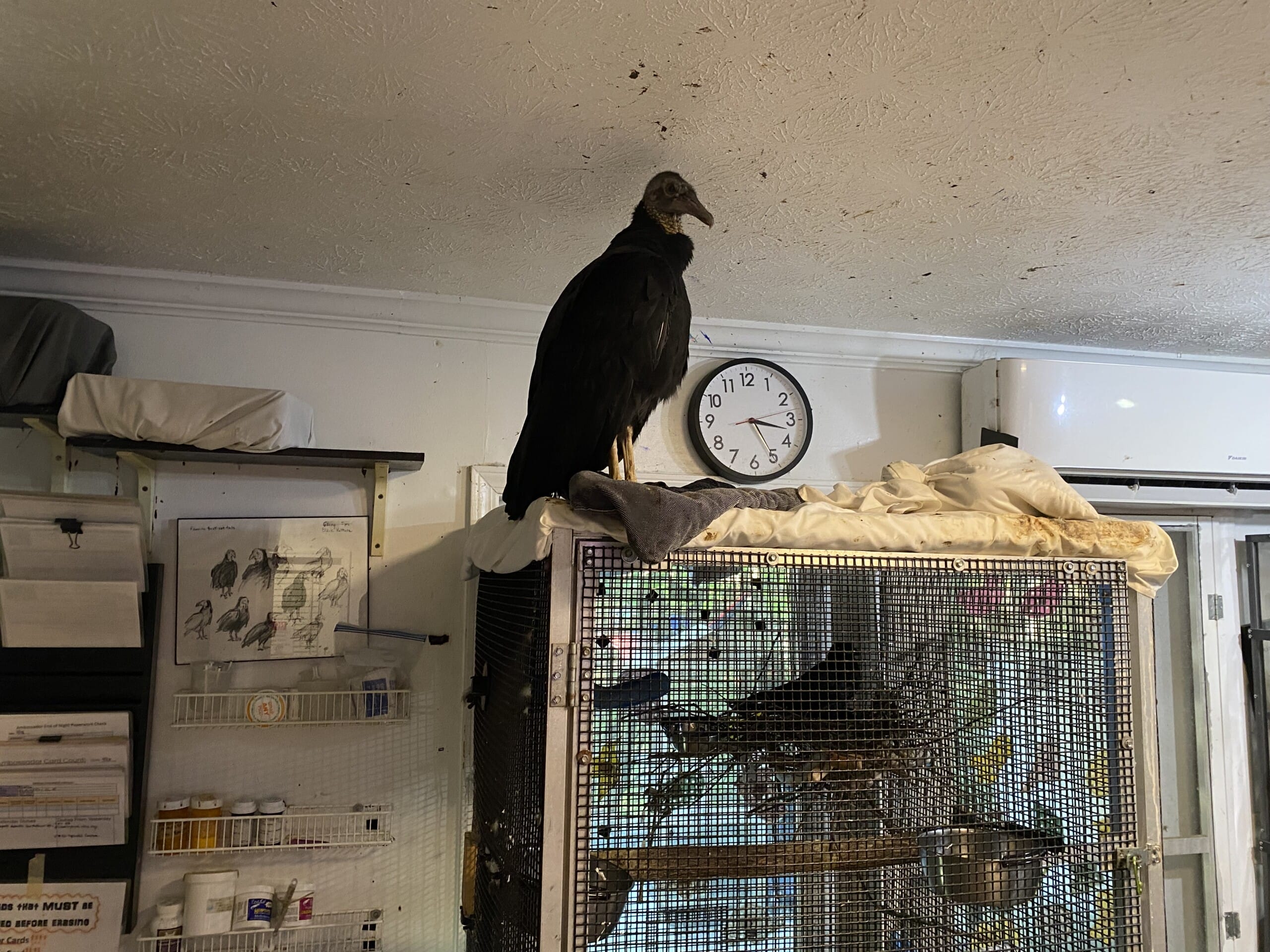
Carrie the vulture is one of AWARE’s many Ambassador Animals that live at the rehab center. (Joseph R. Goodall)
Every year, their dedicated staff and volunteers serve over 1,400 orphaned and injured “patients” from across the Metro area—representing nearly two hundred species native to Georgia—and releasing as many as possible back into the wild. But the nonprofit also plays a crucial role in educating the public about respecting and protecting the wildlife that shares our urban landscape.
A couple years ago, I saw a coyote out my back window. In the hazy morning light, I watched him track along the utility construction zone paralleling the creek behind my house. He moved with a slow, limping gait, his route bound on each side by black silt fencing. When a neighbor pushing a stroller approached along the street, the coyote paused behind a muddy yellow excavator. Then, he hobbled up the slope to cross the road.
That was when I noticed one of his front paws was missing, gone at the wrist. It took my breath away. Once the three-footed coyote made it over the curb, though, I saw him swing his head back. Sure enough, a second coyote was following in his tracks. Together, the pair bounded down the far slope and disappeared into the remaining creekside foliage.
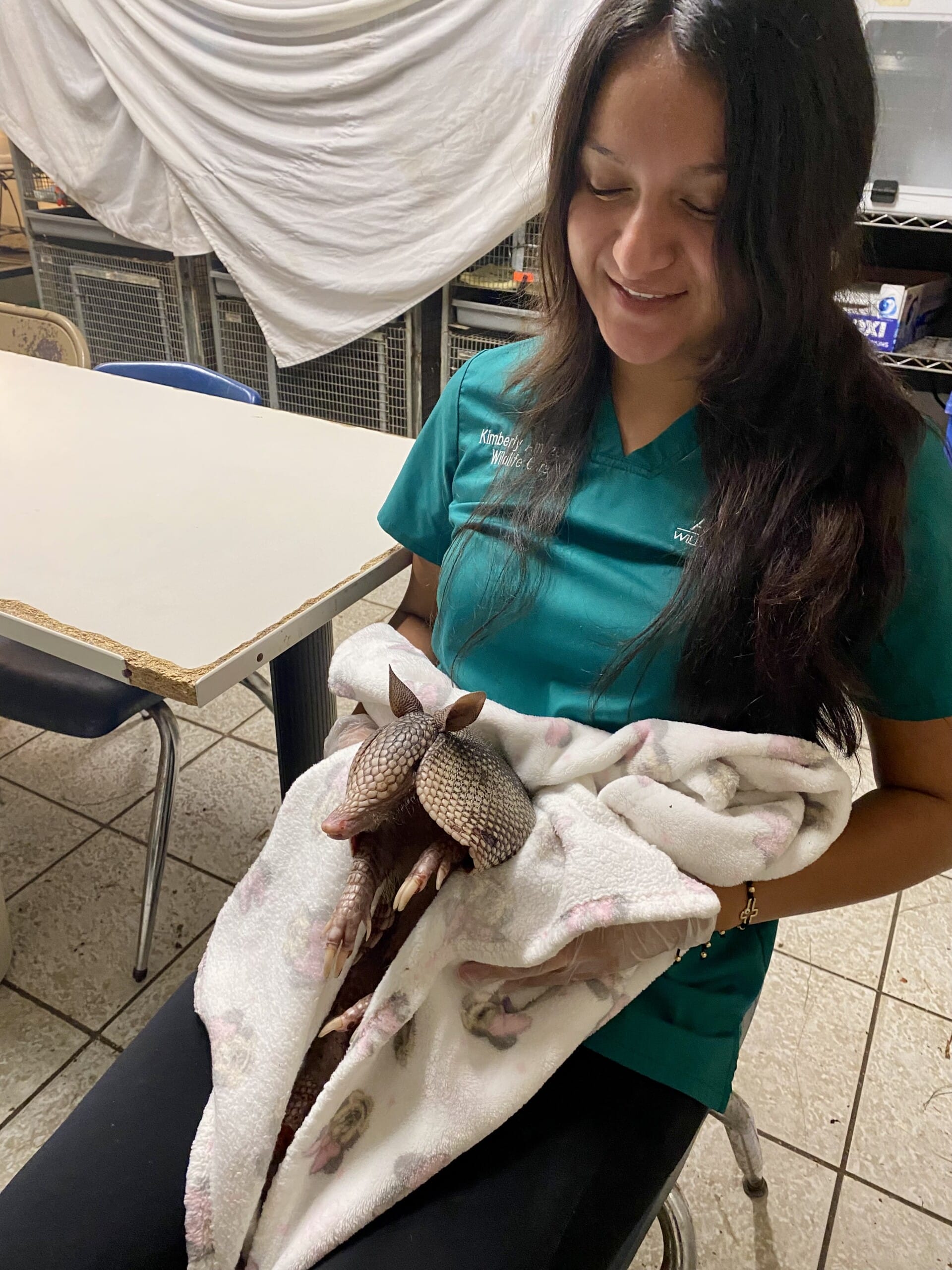
Armadillos are another animal frequently injured by roads. This one was lucky to wind up at AWARE. (Joseph R. Goodall)
The next time I encountered an injured animal, it was caused by a distant coyote cousin—my pet terrier mix. One summer morning he chased a flock of fledgling birds into a holly shrub and emerged with one in his mouth. I lost my cool, loudly demanding he release the poor bird (he was also out of sorts, as his hunting instincts are rarely successful). Once my dog was inside, I crouched beside the shuddering, dark-feathered bird and sent a message to AWARE’s online “Animal Help Desk.” Unfortunately, they were at capacity. Following their detailed instructions, I gently scooped her into a cardboard box and kept her in the shade. Sadly, she did not survive the day.
I felt a mixture of guilt and resignation about my dog’s actions—and my ignorance. It’s part of nature’s cycle, I told myself naively. In reality, I’d witnessed another sign of nature’s entanglement with urbanization. In 2008, the worldwide population of city-dwellers exceeded rural inhabitants for the first time in history. The shift occurred earlier in the US, where urbanites went from roughly 40% of the population to almost 85% over the last century, even as our overall population nearly quadrupled. So it’s no wonder that, more and more, people are crossing paths with distressed animals on highway shoulders and the edges of suburbia.
Organized rehabilitation of injured wildlife began in the 1970s and has since become a regulated practice with evidence-based standards and a code of ethics. While veterinary care for domestic pets is a well-funded industry, wildlife rehab is largely subsidized by private donors and volunteer labor. While permitted through Georgia’s Department of Natural Resources, wildlife rehab doesn’t receive state funding. The work is heavily reliant on Good-Samaritan “rescuers” willing to respond to an injured or abandoned animal and bring them to a certified “rehabber” (independent clinics like AWARE are scattered across the country, but many individual rehabilitators operate out of their homes).
The limping coyote and tiny bird stayed on my mind. The prospect of treating so many “symptoms” seemed daunting, especially without addressing the root cause of our city-dwelling habits. So I was encouraged to find the AWARE team has been engaging thoughtfully with these issues for two decades now. (In fact, on October 22, AWARE is celebrating their twentieth anniversary with a “Wild Night Out” fundraising gala.) Even while treating injured animals, they are enthusiastic about sharing guidance on how to improve our relations with wildlife. So I thought to pay their wildlife center in Stonecrest a visit.
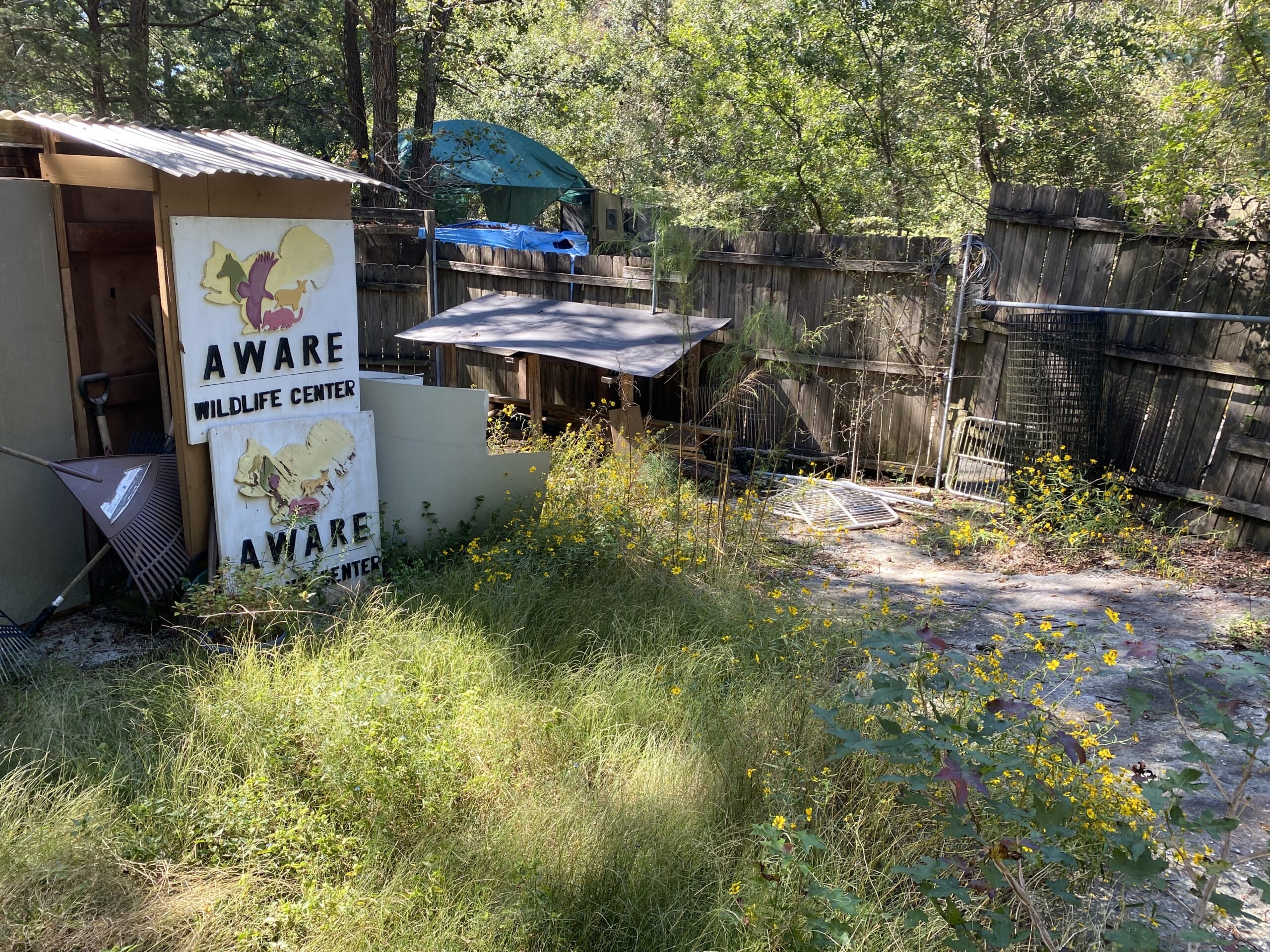
When I stopped by AWARE’s clinic on a warm autumn afternoon, the yellow “daisies” (really, sunflowers) were still blooming on the nearby granite outcrops. Executive Director Scott Lange greeted me at the door. “We use every square inch of the building,” he told me. His desk is sometimes shared with animals of all shapes and sizes. Back when he worked as an attorney, Lange was introduced to AWARE when his friend found an injured bird in a parking lot. Later, he joined the nonprofit’s board and is now married to that friend (his wife Nan has written an educational jingle about not throwing apple cores out the window).
“Don’t worry if you get in someone’s way,” Lange said as we toured the office. He led me past several volunteers working at a medical station, through a central room with a squawking crow, and to a kitchen lined with glass jars and buckets labeled by food type. Here, Wildlife Care Supervisor Sami Netherton was giving rat-feeding instructions to two other women at a stainless steel island. Even after Lange left, we were shoulder to shoulder, and I had to move around like a Tetris block to let several workers through.
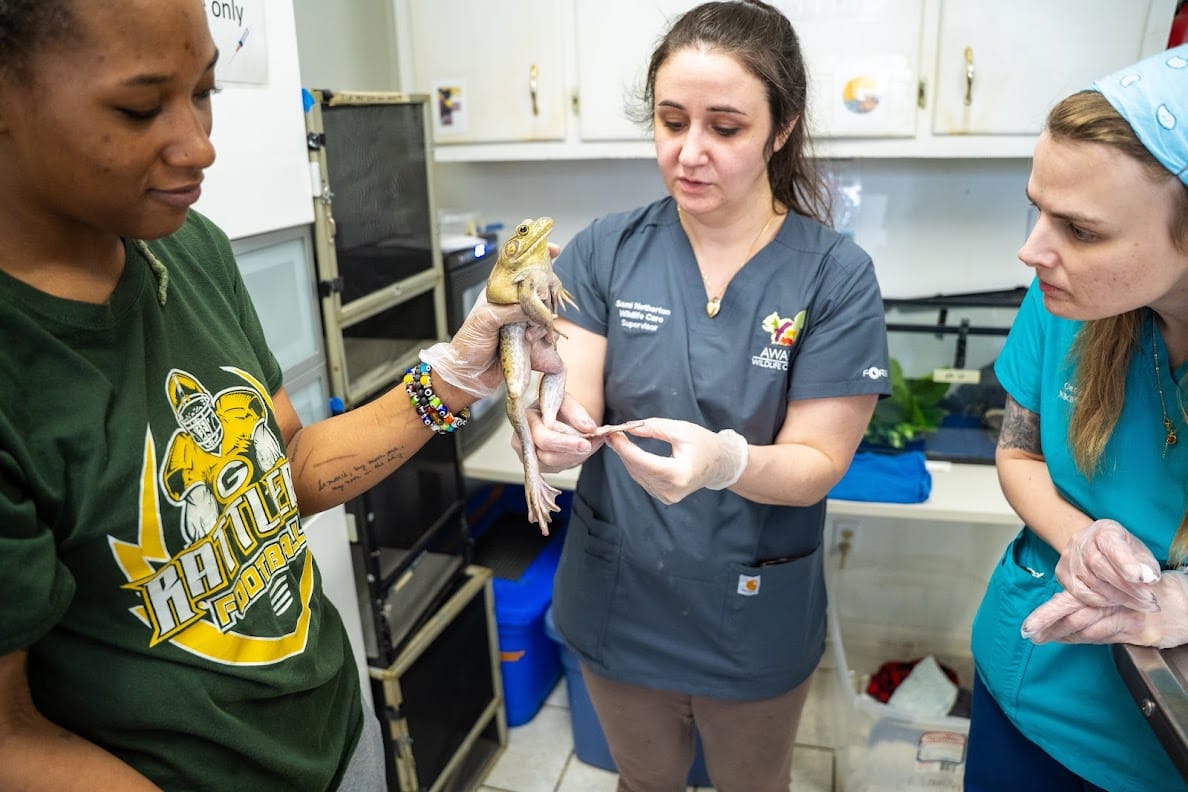
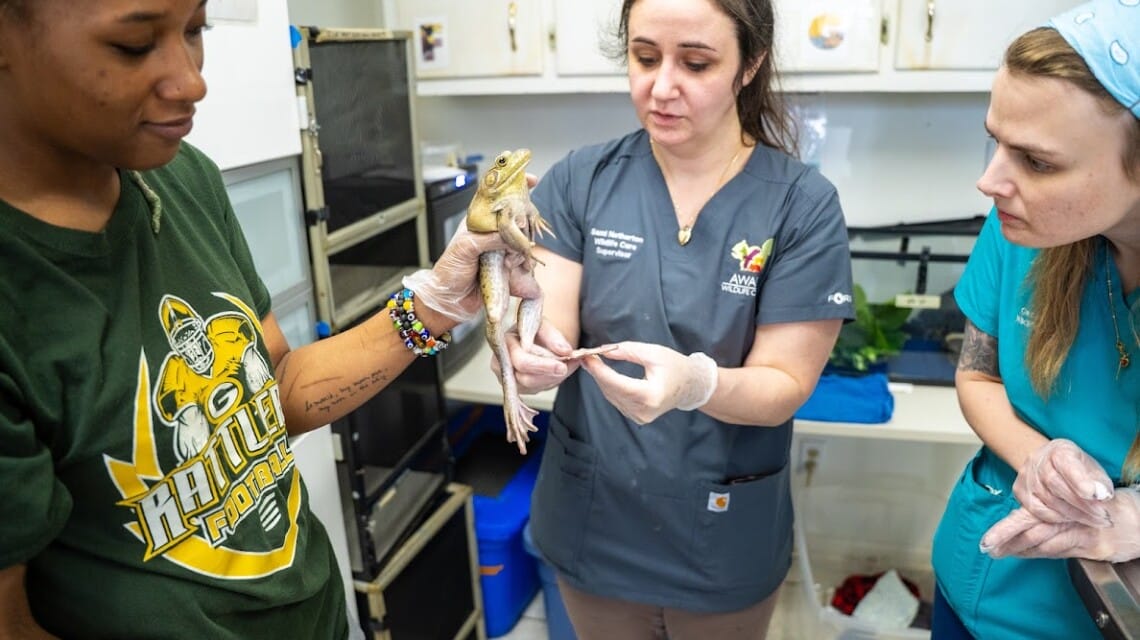
AWARE Wildlife Care Supervisor Sami Netherton helps two volunteers examine a bull frog. (AWARE)
Netherton calmed my awkward shuffling with a smile. “A lot of my time is spent training volunteers,” she said. As she laid out laminated menus on the counter, I found she was eager to discuss her tasks, not just have me observe them. In her role as a Wildlife Care Supervisor, she collaborates with eight other staff members and a hundred weekly volunteers to keep the operation running (they accept volunteers and intern applications on a rolling basis, no experience required). After studying biology at UGA, Netherton began volunteering at AWARE and then was offered a job. Ten years later, she’s devoted herself to animal rehabbing both locally and abroad, through involvement with the International Wildlife Rehabilitation Council (IWRC) and leading the Certified Wildlife Rehabilitator program.
We bounced throughout the building. In a bright, tiled room, she checked in on two Virginia opossum (often shortened to “possum”) patients scurrying around padded cages. One had suffered puncture wounds on her back, while the male next door had been brought in without any fur. Sphinx, as Netherton referred to him (patients are sometimes nicknamed but they do not officially name the wild animals), had regrown much of his coat over the last couple weeks. Hopefully, both possums would be released within the next month before the cold set in.
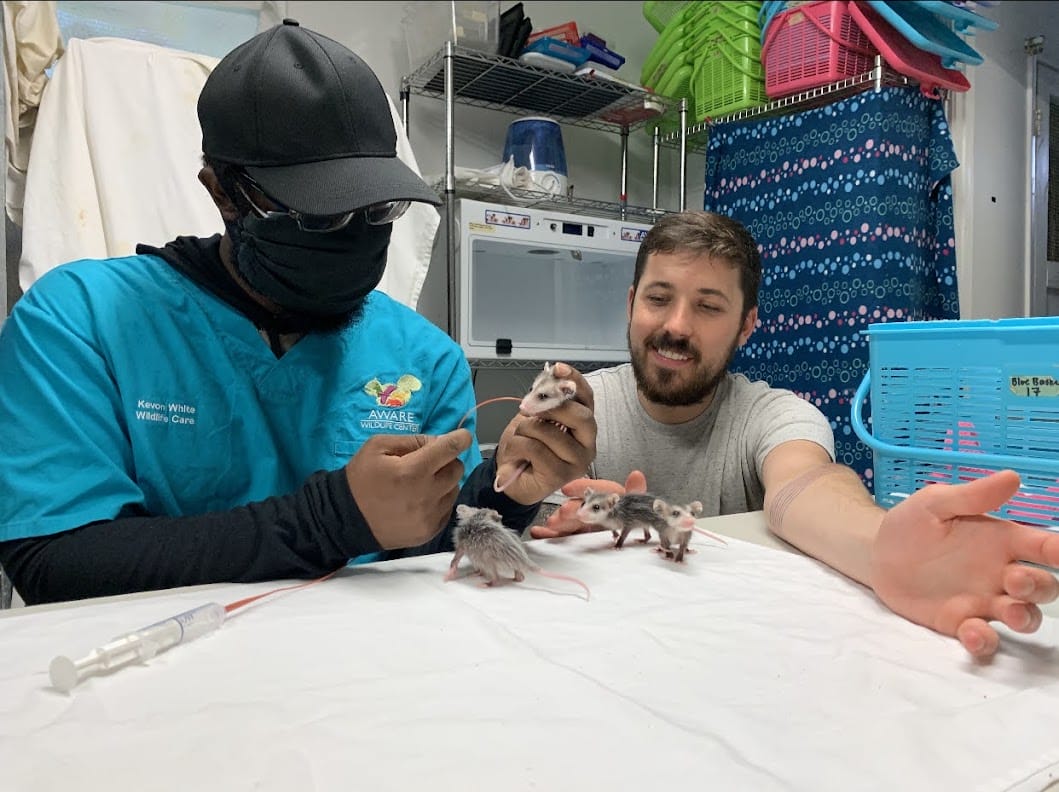
Volunteers help feed baby opossums, which are quite cute when they’re little. (AWARE)
Possums are actually AWARE’s number one patient. They’re small, nocturnal scavengers, and the only marsupial native to North America—meaning their mothers carry young in a pouch, like a kangaroo. “Baby season” is AWARE’s busiest time of year, which in Atlanta is between March and October. During this range, AWARE has received over 250 patients in a peak month. The team works hard to release patients before the winter, or else they need to stay at the facility until spring. As the climate changes, though, Netherton has seen breeding patterns shift. Possums typically give birth in March and July, but this past September they received a wounded mother carrying babies.
In the next room, baby squirrels were carefully being fed, held in towels as they greedily drank formula from the tip of a syringe. As they mature, rehabilitators ensure orphaned animals can scavenge and feed themselves. These “wild animal” traits are important to maintain. At AWARE, there is a strict “no bunny hugging” policy to honor this distance between humans and other animals.
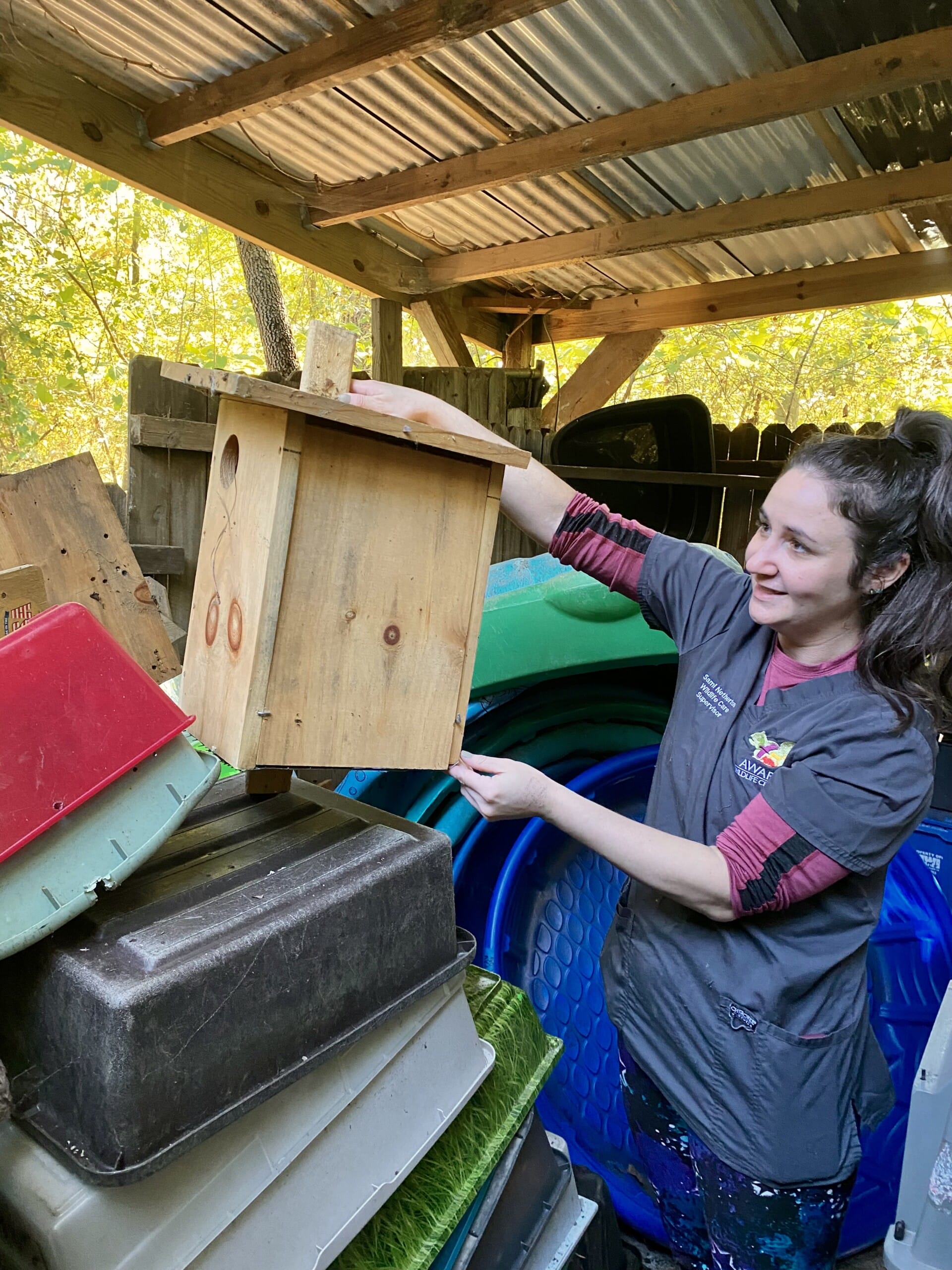
Netherton displays a squirrel’s wooden nesting box, yet to be installed. (Joseph R. Goodall)
Even so, the staff and volunteers complete their work with obvious care. Netherton praised a technician as she confidently administered antibiotics to an Eastern box turtle. The two women feeding the rats told me, “they say thank you six million times when we’re volunteering.” Outside the building at a storage pavilion, I noticed Netherton smile warmly as she showed me a wooden nesting box. They are installed on trees when squirrels are released, allowing the animals to keep the home they grow accustomed to at the clinic. However, Netherton is also honest about the reality of the food chain. Returning animals to the wild mitigates human impacts and helps threatened animals reproduce, but it also supports predators looking for a meal.
Not every patient can be released, unfortunately. From car impacts to pet attacks, electrocution to window strikes, Netherton has witnessed a complex array of injuries. With support from a veterinarian, monetary contributions and donations of food and materials, AWARE treats as many patients as possible. Some nonreleasable animals are rehomed to qualified partners, like a bald eagle given to the Citizen Potawatomi Nation. Others become “ambassador animals” at AWARE, introduced to visiting school groups or taken to education programs across town.
The ambassadors take up residence around AWARE’s facility like lettermen. There’s Carrie, a regal black vulture, and Mary Shelli, an Eastern box turtle who’s lived there for almost twenty years. Up the slope from Cocoa and Beakers, red-tailed hawks, I met Joey. The sight-impaired possum was roaming his two-level enclosure, his long snout quivering with curiosity. Since he joined AWARE in Spring 2025, he’s been featured at many events, including Arabia Alliance’s recent twentieth anniversary celebration.
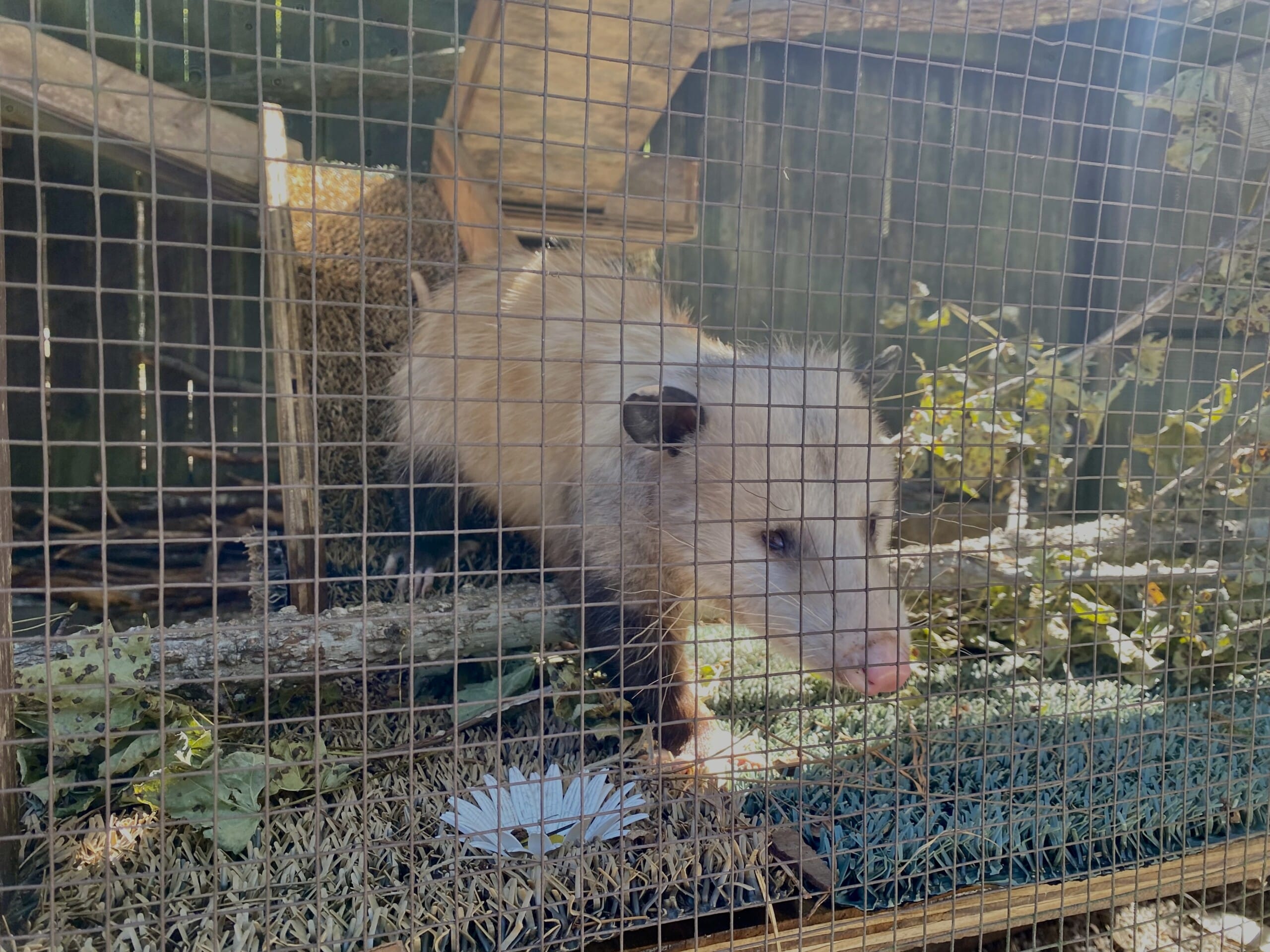
Joey (no relation to the author) hanging out in his enclosure. (Joseph R. Goodall)
Since Netherton is involved in pushing her profession forward, I asked if she’s been encouraged by any progress. She’s noticed a shift in online chatter about wild animal encounters, neighbors knowing not to leave trash out, feed wildlife, or take a baby from its nest. AWARE’s Help Desk has helped to spread this knowledge. But she’d like to see a more robust education program, like getting a driver’s license, that equips human residents to “peacefully coexist” with their wild counterparts.
My visit to AWARE introduced me to an innovative and still-developing industry, necessitated by our urban way of life. It also pointed me to the Atlanta Coyote Project. On the organization’s website, a video depicted Dr. Chris Mowry talking about the wild canines while checking wildlife cameras at a local park. “They are very adaptable,” he told a pair of dogwalkers. “And they often form nuclear families.” I thought of the limping coyote from years ago and his partner, crossing the street in my neighborhood. Though they may still be misunderstood as a “nuisance species,” I’m maintaining a vegetated corridor for coyotes now along the stream in my backyard. And along it, there’s also a fence to contain my dog.

Joseph R. Goodall
