South River: A Waterway At A Crossroads
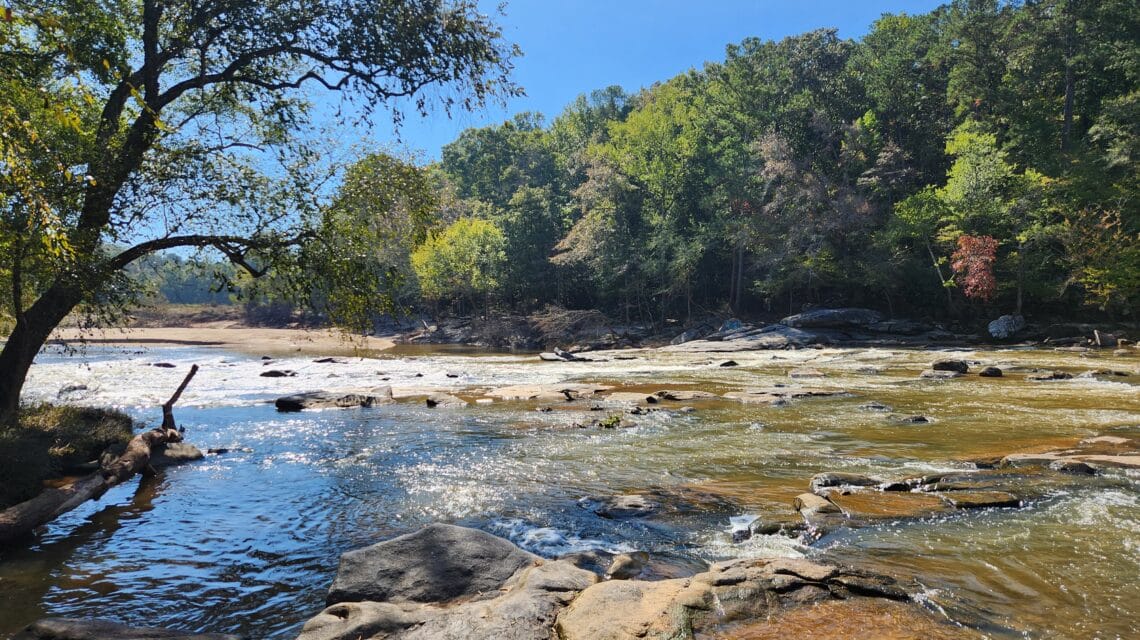
For years, the South River Watershed Alliance has made progress cleaning up the waterway known as the South River or Weelaunee. But environmental justice remains illusive for a number of reasons.
The South River is one of the defining features of the Arabia Mountain National Heritage Area (AMNHA), a blue ribbon that runs through this historic landscape. With headwaters in East Point, the South River has seen centuries of human activity. In pre-Columbian times, native peoples used the South River and similar waterways as critical trade routes, the highways and railroads of their time. As indigenous people were evicted, the South River became a focal point for agriculture and industry. People enslaved at Flat Rock worked on fields irrigated by the South River, and the mills that now give their names to roads in Stonecrest and the surrounding area were built along its banks.
Today, the river faces two competing futures—one of recreation and celebration, and the other of disinvestment. Luckily, thanks to the work of organizations like the South River Watershed Alliance (SRWA), the South River has seen enormous improvements in water quality and green space protection over the past several decades. The state recently upgraded the South River’s water quality designation, unlocking new funds for river cleanup and conservation. Meanwhile, SRWA and partners are hard at work to create a water trail stretching from just north of the AMNHA to Jackson Lake in middle Georgia, where the river ends. This water trail will include designated places along the South River for access ramps, allowing canoers and kayakers to better get on and float down the waterway.
Because when people know about the South River, they care about the waterway. “Once folks are on it, they are totally amazed, and that’s been from day one,” says Jacqueline Echols, PhD, board president of the SRWA, which works to protect the river. SRWA advocates for higher water standards, cleaning up municipal storm water systems, and habitat restorations, while also connecting people to the river and greenspace hidden in plain sight. Ultimately, SRWA and partners envision conserved greenspace, the return of native wildlife, and easy access to recreation along the waterway that was known to native Muscogee for generations as the Weelaunee, or “green river.”
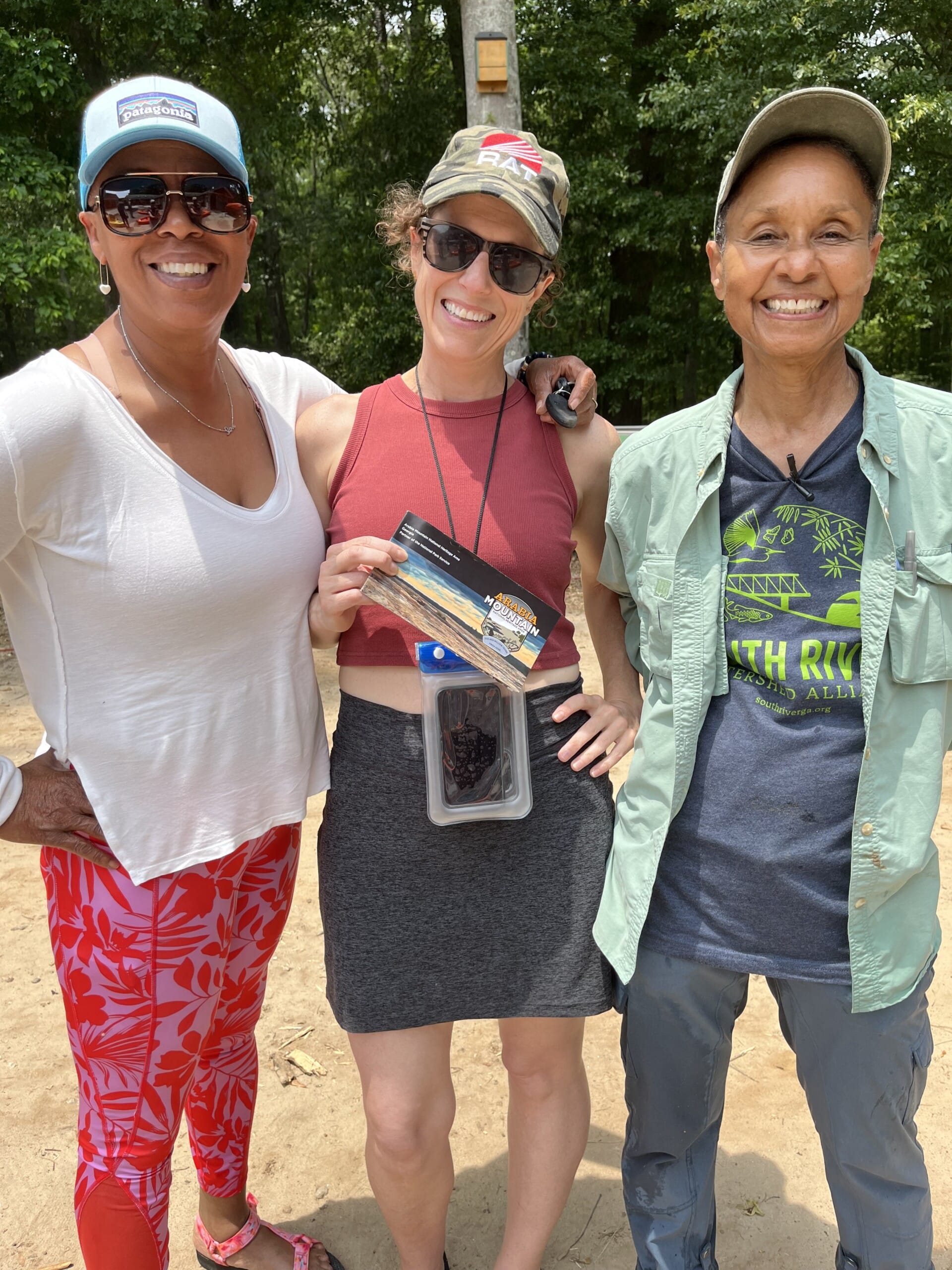
Dr. Echols (far right) with SRWA Executive Director Margaret Spalding and Arabia Alliance Executive Director Revonda Cosby.
The current successes, both secure and in-progress, have not always been the norm. The watershed has long been a poster child for environmental justice, as the majority-Black communities who live along the river have had to deal with a slew of chronic issues. In 2021, nonprofit American Rivers labeled the South River as one of America’s most endangered waterways.
One of the most prominent concerns has been the City of Atlanta’s and DeKalb County’s sewage overflow systems. During large rain events, excess storm water that enters the sewage system is design to pour out into the South River. SRWA has engaged in decades of legal battles with Atlanta and DeKalb County, pushing the governments to fix leaking pipes, resolve ongoing sewage overflow issues, and in general clean up the river. While ongoing, this legal work continues to be a critical tool to make sure that governments and, in some cases, private landowners take responsibility for pollution and change their practices to clean up the river.
Change on the sewage overflows has been slow. In 2011, DeKalb County entered into a consent decree, a provision of the Clean Water Act that creates a legal agreement between a polluter and the Environmental Protection Agency to clean up a water system. That was a major step—but the process of actually enforcing the consent decree has been another matter. “It’s still in court,” Echols says. While SRWA’s work has led to a cleaner river overall, DeKalb County has repeatedly missed deadlines associated with the consent decree, most recently announcing that it would miss a key 2027 milestone. Updates to the consent decree are ongoing, and heavy fines from a federal judge may be on the horizon if the county does not comply.
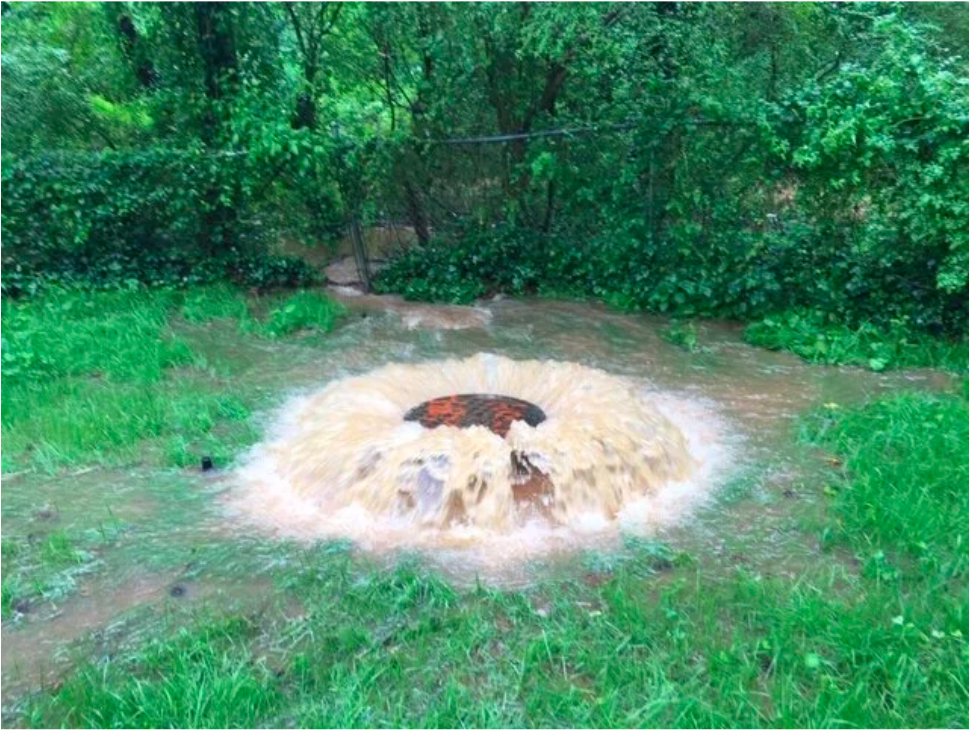
Atlanta’s sewer and water runoff systems are still not adequate enough to avoid sewer caps from overflowing as seen in this photo. (SRWA)
Another critical environmental justice issue is the South River’s role as a dumping ground for projects and developments unwanted elsewhere. In South Atlanta, this trend is at times literal, as multiple garbage dumps have been built around the majority-Black neighborhood of Constitution. Similarly, the South River Forest, a proposed landmark park in that same neighborhood, was ultimately scrapped in favor of the Atlanta Public Safety Training Center (also known as “Cop City”), a massive complex that eliminated green space in an already flood-prone area.
“Over the years, because that area…was ignored, that lack of development did preserve a lot of green space. But that also leaves it very vulnerable, as we saw,” Echols said. The original vision for a 300-acre park which formed the linchpin of a larger, regional green space is, in Echols’ words, “dead.” Speaking about the loss of planned parkland, she added, “That just never would have happened on the Northwest side of town…the community deserved an explanation, and they never got one.”
Despite these headwinds, SRWA and other advocates are moving forward toward a healthier, greener, and better protected South River. One of the most powerful and important tools? Recreation. “If you’re going to improve water quality, you have to get people on the river,” says Echols.
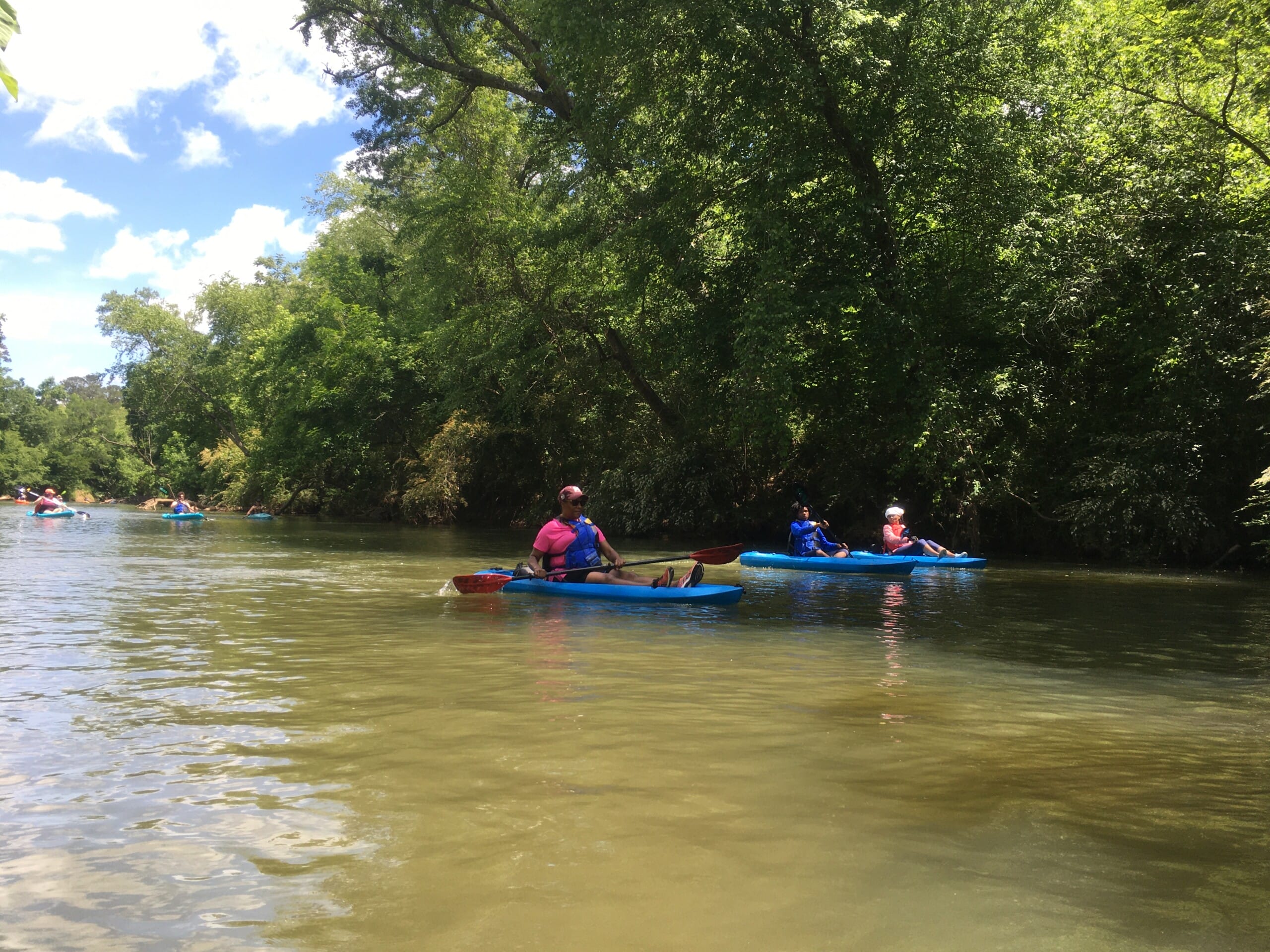
Water recreation, i.e. paddles hosted by the SRWA, remains the most effective tool for educating others about the Weelaunee.
Recreation has several compounding benefits. First and foremost, when people know about the South River and the green space found along it, they fall in love with the place. “Once people are on it, they’re absolutely amazed,” Echols says. Second, in Georgia, water quality designations are partly tied to how much a waterway is used—more usage means a higher water quality designation means better resources for monitoring, cleanups, and conservation. Due to a provision of the Clean Water Act, Echols adds, “if people recreate on the river, then that sets the stage for improved water quality at the state level.” Georgia’s state Environmental Protection Division (EPD) upgraded the South River’s water quality designation from “fishing” (the lowest level) to “recreation” in 2024, a major victory in ensuring not only that the river is cleaner now, but also that it has the resources and legal muscle to stay that way. The popular South River paddles that occur each summer have been a means to get people on the river, experiencing its wonder while also changing that critical designation.
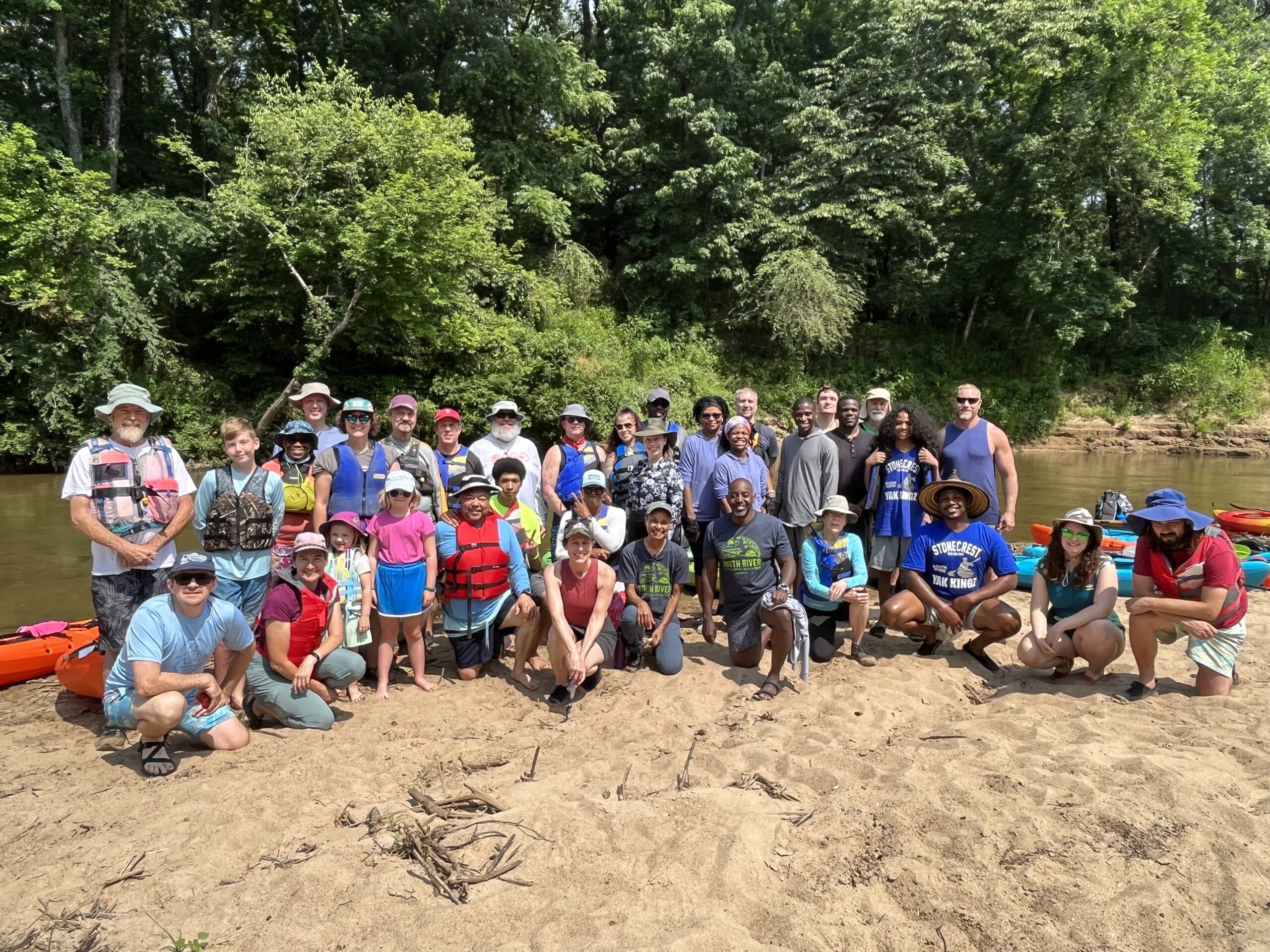
SRWA’s two heads, Margaret Spalding and Dr. Echols at center front row, pose with a cadre of paddlers, including several Arabia Alliance team members.
That’s one reason building out a permanent water trail is so important: It helps solidify the South River as a place that people explore and care about. While Hurricane Helene was a major setback to plans for the water trail—destroying some kayak launches and dramatically reconfiguring the banks of many sections of the river—SRWA is pushing forward. A new launch point at Butler’s Bridge Park in McDonough recently opened to make it easier to get on the water, and others are on the way. This combination of guided tours and park infrastructure is building support for conserving the South River, both today and in the future.
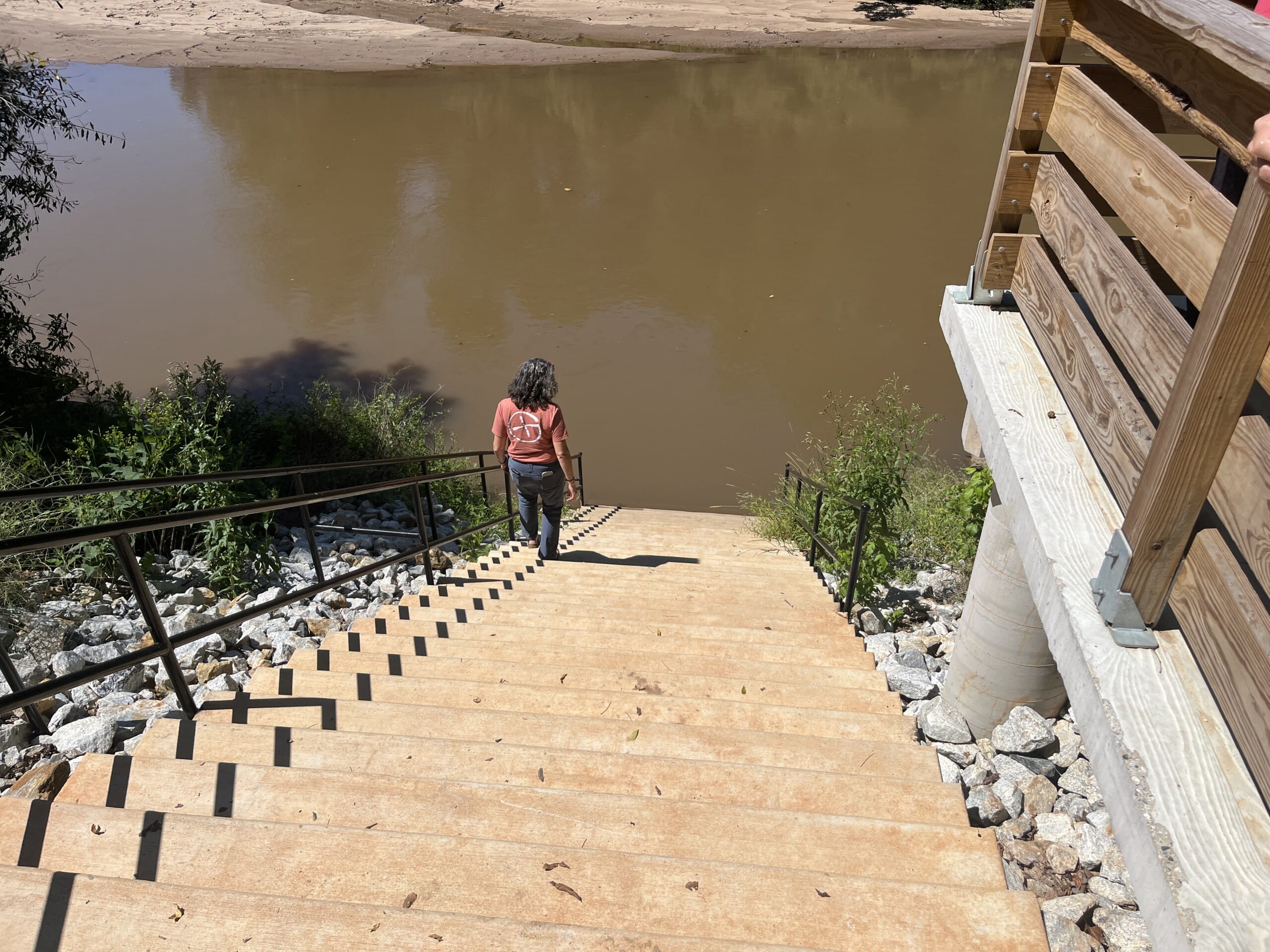
The new kayak launch at Butler’s Bridge Park is made of concrete and designed to withstand storm surges.
Today, conserving the South River has momentum. SRWA and partners are working to protect additional green space along the banks, get more people on the water, and reintroduce wildlife that has long been absent. In the AMNHA, access to the river is getting easier, with stops on the water trail planned for And even if you’re not a kayaker, it’s easy to access and view the South River from the Arabia Mountain PATH as you hike or bike. Lastly, anytime you visit the South River, be sure to check in on the SRWA’s website. Just by being there, you can help conserve the future of this vibrant waterway.
Zack Fox Loehle
