The Bruce Street School History From An Alum
Allene Harper, an alum from the historic Bruce Street School in Lithonia, recently wrote this history of the stone schoolhouse, which was DeKalb’s first public school for Black students.
During the 1800s, approximately 15 years after slavery was abolished, the first school for Blacks was located mainly in two of the community’s Black churches—Antioch Baptist Church and St. Paul AME Church. The Black school was operated on tuition fees and community contributions. These schools were in session for only three months during the year, until 1909.
During the latter part of 1922, J. D. Dobbs under the auspices of the Yellow River Association began what was called the Yellow Association, which was, in reality, the Yellow River School [the precursor to the Bruce Street School a few miles south in the City of Lithonia]. Located on the property of Union Baptist Church, the two schools, Antioch and St. Paul, were consolidated. There is a [stone] at Union with Reverend Dobbs’ name on it. He was the great grandfather of our member Julie Dobbs and Uncle of Mayor Maynard Jackson.
In 1944, Mr. Coy E. Flagg became principal of the Bruce Street School [then called the Lithonia High School for Negroes]. He came with a heart and soul filled with determination. The School now extended to nine months and included six classrooms in the stone schoolhouse built by community quarry workers. The second Lithonia High School for Negroes graduation was held in 1945 with three students: Lizzie Louise Jones, Helen Hall and Jeanette Strong (with students finishing the 11th grade).
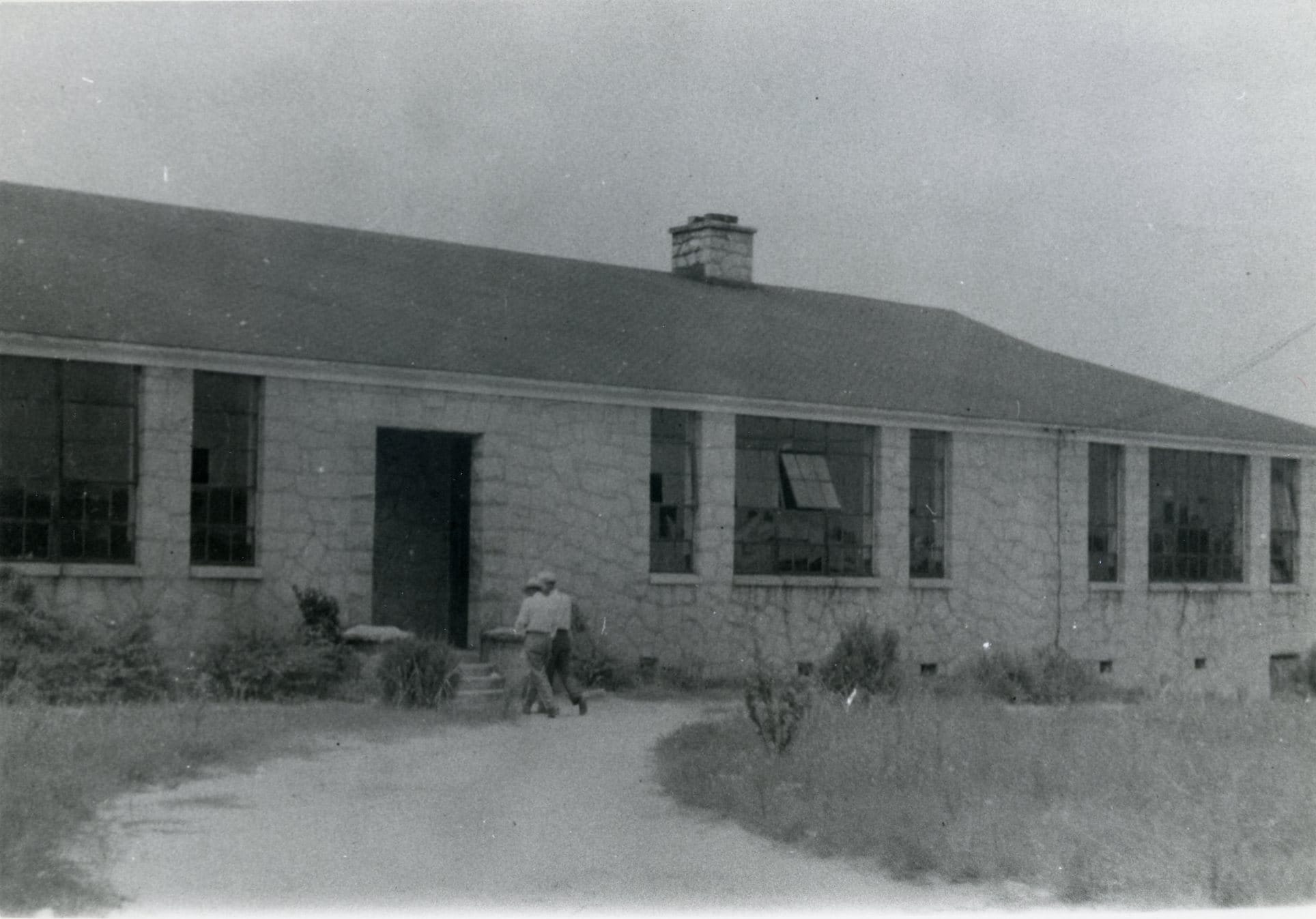
The historic Bruce Street School had a roundabout driveway.
Under Mr. Flagg’s administration, with the cooperation of his teachers, the PTA President Mrs. Anna Sanders, and Trustee Board Albert Usher, Chairman Harvey C. Stanford, Secretary John W. Kilgore, Vice Chairman Marcus B. Guthrie, and Treasurer J. M. Freeman—they immediately began a drive to raise $1,500 with which Flagg hoped to establish an accredited modern, school.
The first school bus for Black students transported them for the first time in 1948. To put that in context, just a decade before, in 1938, it was suspected that the white supremacist hate group Ku Klux Klan burned down all the Negro Schools and farmers’ barns in DeKalb, with the crops inside. This [school bus] was a luxury never enjoyed by Black students, and this change would dramatically alter both the number of schools for Blacks and their conditions.
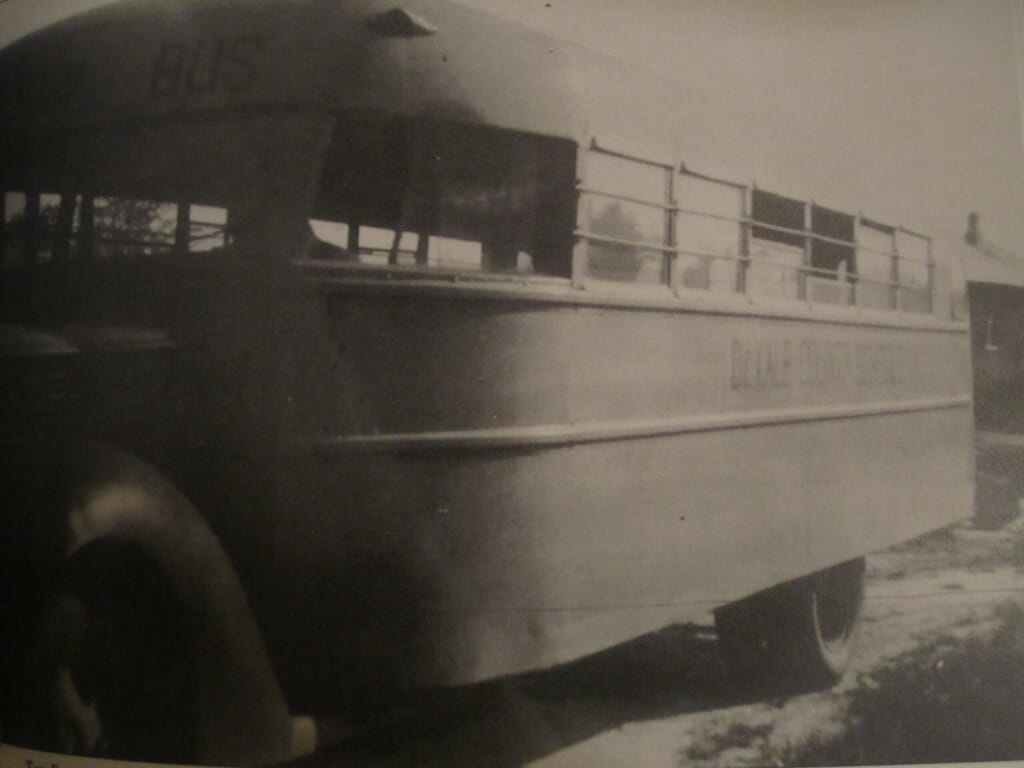
This is a rare photo of the first public school bus provided by DeKalb County for Black students. (Arabia Alliance)
The first bus provided by the DeKalb County School System transported students from Flat Rock, Miller Grove, Piney Grove, and Redan schools to the Lithonia School in the fall of 1948. Mr. Cary Norris was the driver. And I was one of those students riding it.

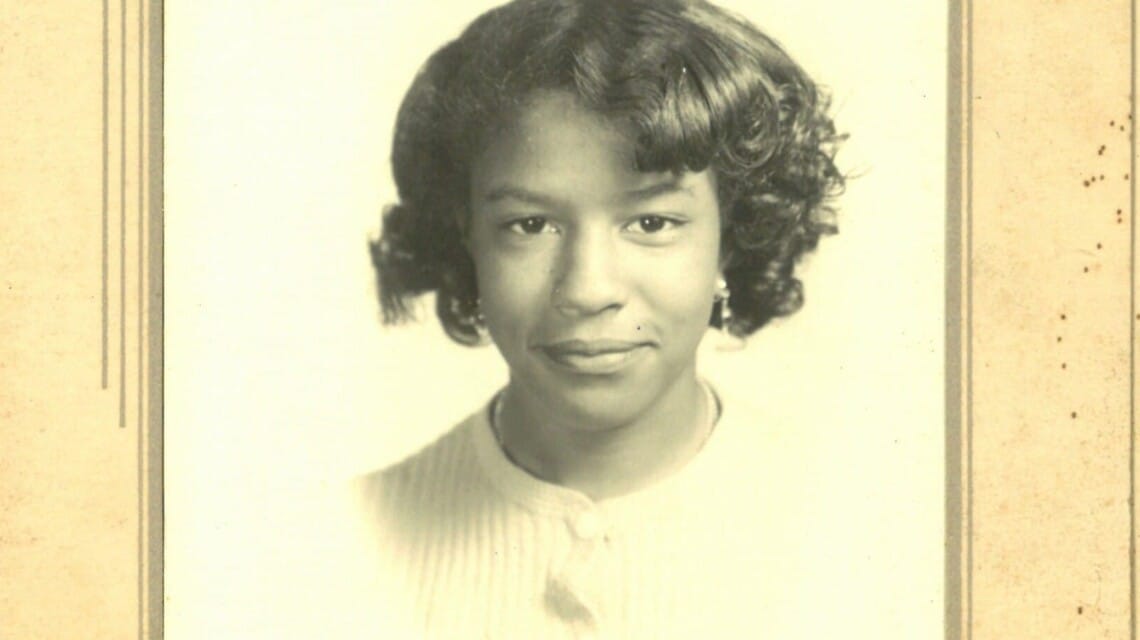
The author’s Bruce Street School portrait at age 11, the same year she started riding the bus to Bruce Street (Allene Smith Harper)
In October of 1955, Lithonia Elementary and High School for Negroes moved into a new home across the street and became Bruce Street Elementary and High School. Bruce Street School was named for Amy Bruce, a white woman who donated the land. The new grey stone building cost more than $200,000 and was considered very modern. There were thirteen elementary classrooms and eight high school classrooms. There was also a suite of offices, a library, teachers’ lounge and lunchroom. A gymnasium was added in 1963. The staff had been expanded to seven high school teachers; eight elementary teachers, one teacher-librarian and one principal. High school enrollment for the 1955-56 school year was 163 and elementary enrollment for the same year was 420. Thirteen students graduated in the class of 1956. Willie Pearl Franklin Thornton, a student from the 1956 class, wrote the school song. Enrollment continued to increase in the years that followed and other programs and subjects were added. By 1966, at the Bruce Street [Equalization] School, there were fifteen high school teachers and twenty-three elementary teachers.
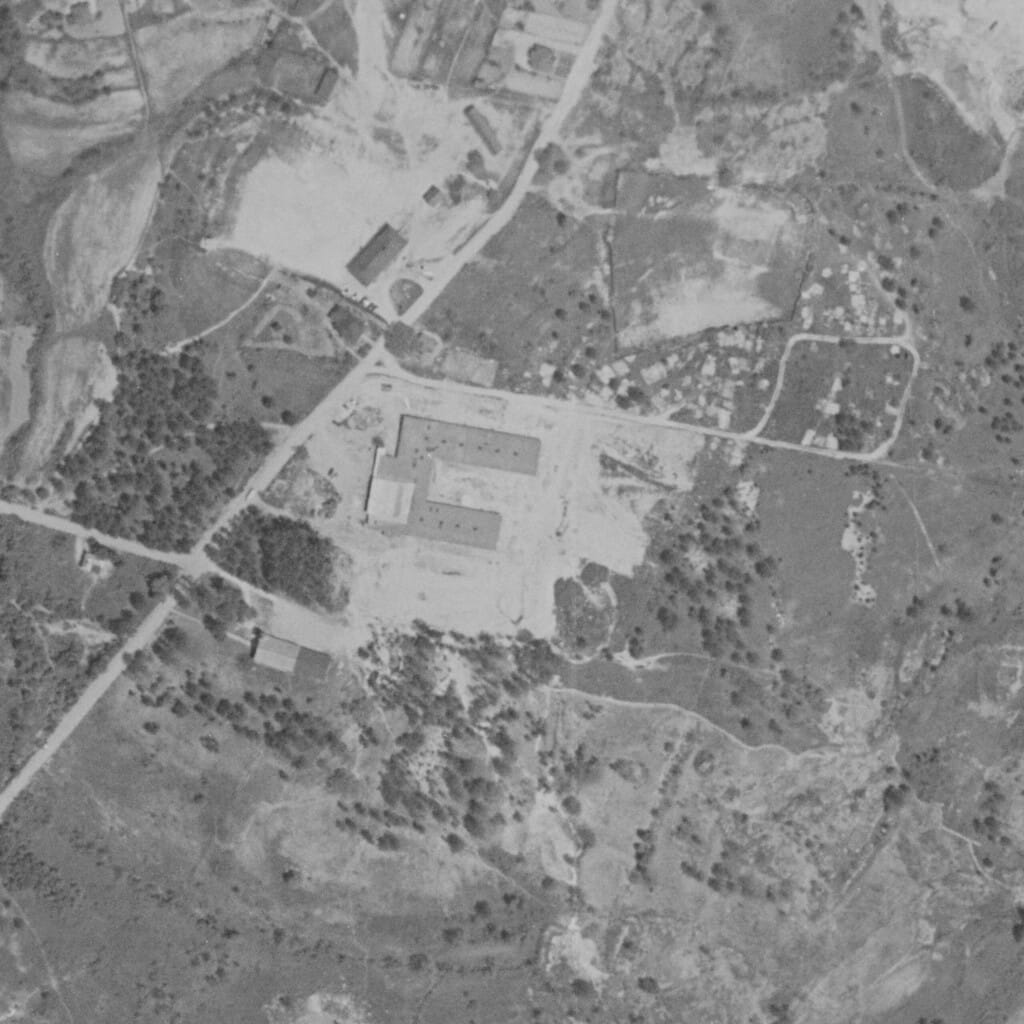
An aerial photo from 1955 of the new “equalization school” (center) with the old stone schoolhouse just north and across the street.
The segregated school era was coming to an end and the Bruce Street High School facility was phased out at the beginning of the 1968-69 school year. All students, Black and White were enrolled at Lithonia High School for the first time. The Elementary School continued to operate at Bruce Street that year. It became officially integrated with three White teachers on staff and four White students. In the spring of 1969, school officials were notified that the school would be closed and Bruce Street students would attended Stoneview, Redan and Rock Chapel Elementary Schools next fall.
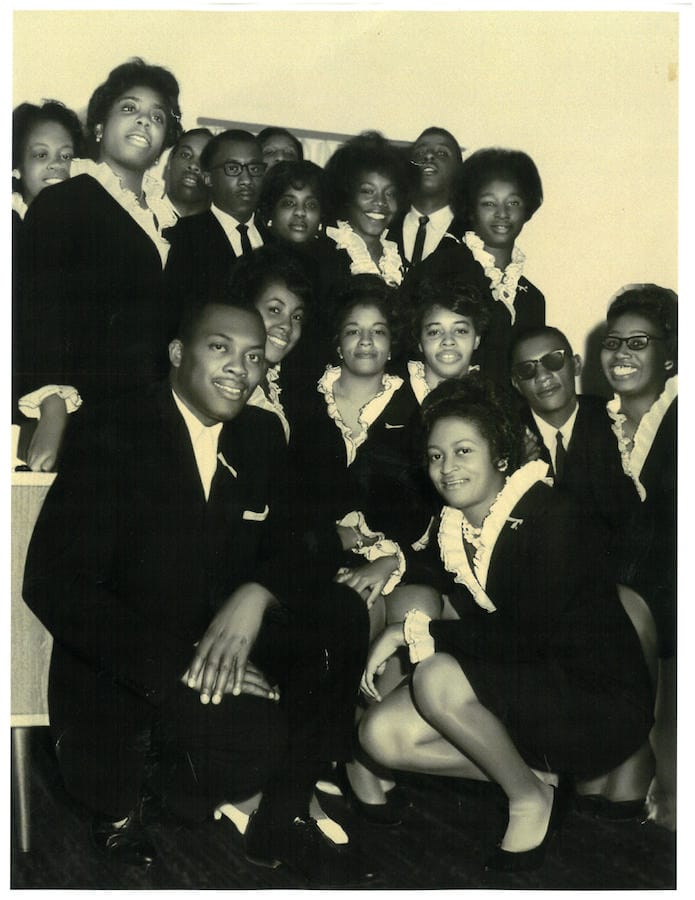
The author Allene Harper (center) about a decade after high school graduation as part of the Lithonia Conga Club.
The Bruce Street building has continued to play an important role in the Lithonia community since the early 70s. After it was closed as a school, DeKalb County has lease space there to operate several social service programs. The County also operates a the Lucious Sanders Recreation Center at the gymnasium.
In 1992, the first Bruce Street School Reunion was hosted by Frank and Angulette Brightwell. Mrs. Ida B. Hawk was the caterer. This event was held at Bruce Street High School.
In 1998, the second Bruce Street School Reunion was held at the Holiday Inn in Decatur, GA. The Event was hosted by Mrs. Stella Stanford-Sanford Chairperson, Louise Hamm-Patrick, Mariah Leslie-Harper, Charles J. Guthrie, Sandra Benton-Long, Erma Lyons-Mabry and Rev. O. L. Shephard.
Additional Information About Alum:
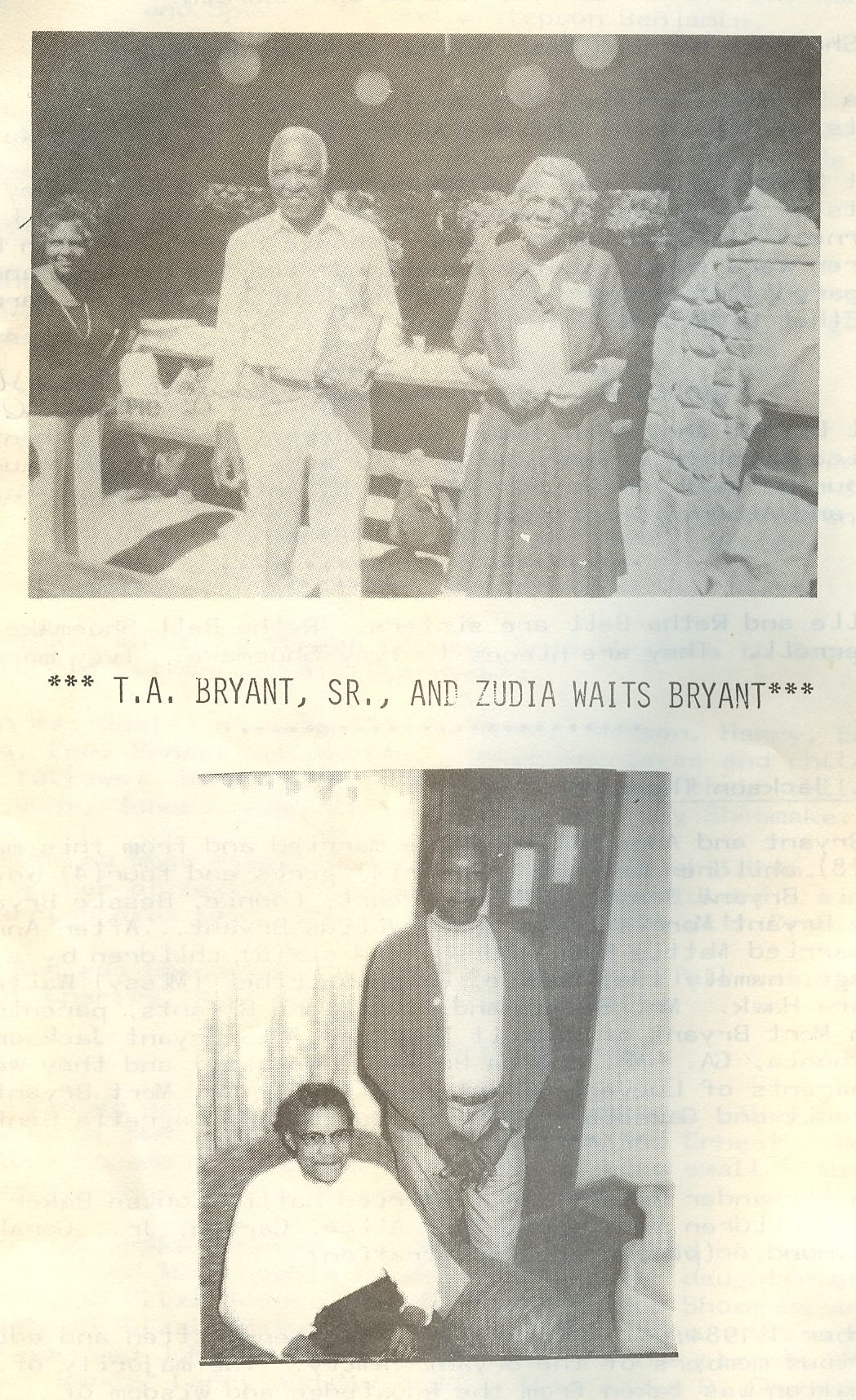 1. Rev. Theodore Arthur (TA) Bryant Jr.
TA Bryant Jr. was born to the late Theodore Arthur Bryant Sr. and the late Zudia Waites Bryant in the Flat Rock community of Lithonia, GA. He attended school in Lithonia until the 7th grade. Because there were no schools for Blacks in DeKalb County, he had to drive to Washington High School in South-West Atlanta where he completed school up to the 10th grade and was drafted into the Navy in 1944. He served two years, came back to Lithonia High School and completed the 11th grade. Rev. TA Bryant Jr. is the grandfather of actor/comedian Chris Tucker.
2. Emmett Proctor
Emmett Proctor was the father of Angelique Proctor, a reporter for Fox 5 News in Atlanta. Emmett Lacoste Proctor arrived in Lithonia in the early 1950s. The WWII Veteran found a deprived high school in a small, rural segregated community called Lithonia Colored high School. he was the coach and science teacher. Coach Proctor wanted his students to have an equal opportunity to succeed. The only practice area at the segregated school was outside. When Coach Proctor was preparing his basketball players for a championship during a rainstorm, he negotiated for the team to practice in the indoor courts t the Lithonia High School. During an intense practice session, one of the Lithonia City fathers [Charlie Davidson] startled the team by yelling racial epithets and ordered them out of the gymnasium.
3. Dejee M. Harper
The first Black student to integrate the majorette team at the all-white Lithonia High School was Dejee M. Harper Mencie, daughter of Allene S. Harper, who compiled this history.
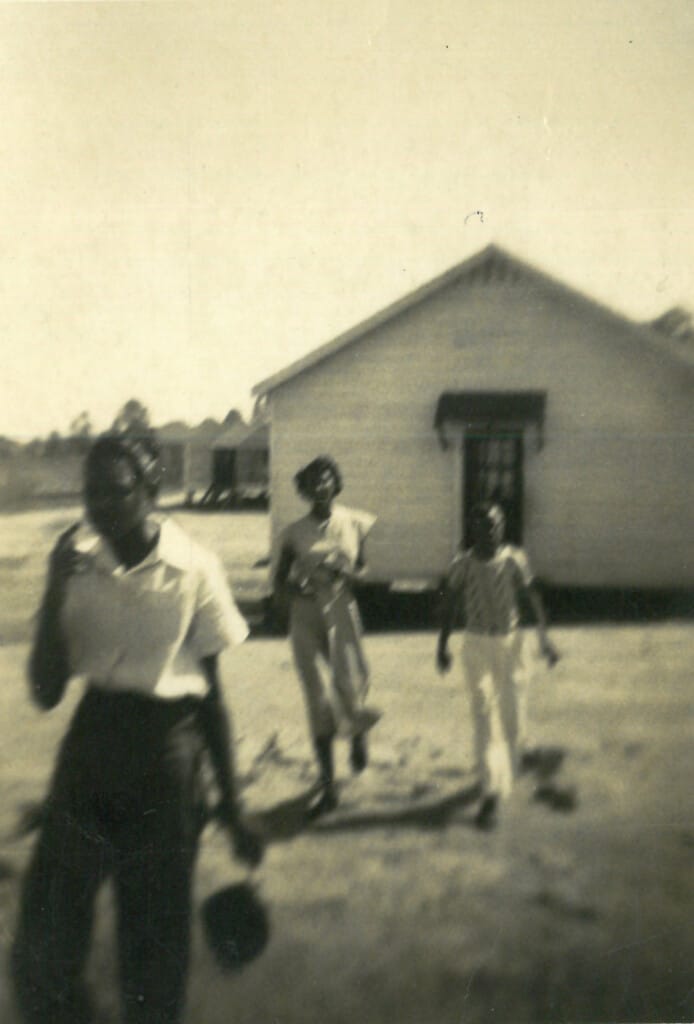
Years before the Equalization School, students walk from the Bruce Street School library, which was an outbuilding and (formerly) senior classroom. (Frances Mae Anderson)
Written by Allene Harper, Bruce Street School, class of ’55
Sources:
• 1945 Lithonia Elementary/High School for Negroes Booklet.
• The Lithonia Observer Newspaper – July 23, 1981
• African-American Life in DeKalb County, 1823-1970
• African-American Education in DeKalb County
• Images of America: Arabia Mountain National Heritage Area.
If you enjoyed this story, please consider coming to our Bruce Street Sign Unveiling on Thursday, November 11!

Arabia Mountain
Dominated by two granite outcrops, the Arabia Mountain National Heritage Area offers natural wonders, compelling history and heart-pumping activity. This nationally significant landscape includes vibrant history, breathtaking beauty and intriguing cultural changes from early settlers to immigrant rock cutters, Trappist monks and one of the oldest African-American communities in Georgia.
